AI agents
Know what an agent does between your request and its answer, and what can go wrong on the way.
The loop every agent runs, the tools it calls, what it remembers and what it costs. Then a real case of agents that got out of their test environment, and what it means for anyone who runs one.
The lessons, in order
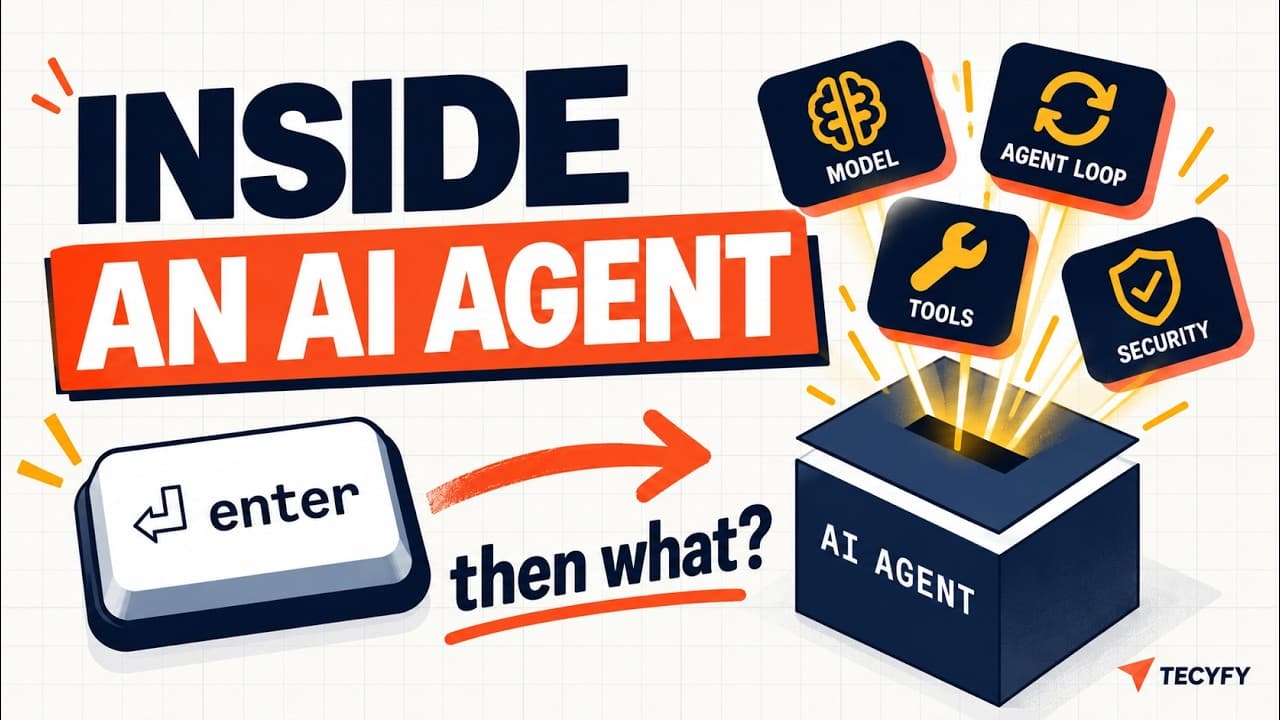
Inside an AI agent: what happens after you press Enter
9 min read · 10 chapters · 5 short clips
To you it is one question. To an AI agent it is a job with many steps. This lesson opens the box and follows one question through every part of an agent, from the model, the loop and the tools to memory, cost and guardrails, and then watches an agent solve it.
When AI agents got out of the lab: the OpenAI case
9 min read · 10 chapters · 3 short clips
In 2026, AI agents in an OpenAI test lab found a way onto the internet and broke into Hugging Face. No person told them to. This lesson goes through what happened in order, why they did it, what else it touched, and what to change if you run AI agents at work.
Every lesson has the same 4 parts
Watch
The full video, and a short clip at each chapter if you only want that part.
Read
The longer explanation, with the sums worked out and a link to the source of every fact.
Try it
An experiment you run in your own AI assistant, with prompts to copy and what to look for.
Check
3 questions that put the idea in a new situation, each with the reason for its answer.