Genie Ontology in Databricks: what it is and how it works
Genie Ontology is the shared business context behind Genie One and Genie Code: the metric views, domains and Pages you define in Unity Catalog, plus snippets Genie learns from your dashboards, queries and agents, ranked by authority and filtered by permissions. How it picks a definition, and how to make it pick yours.
Tecyfy · Published · 6 min read
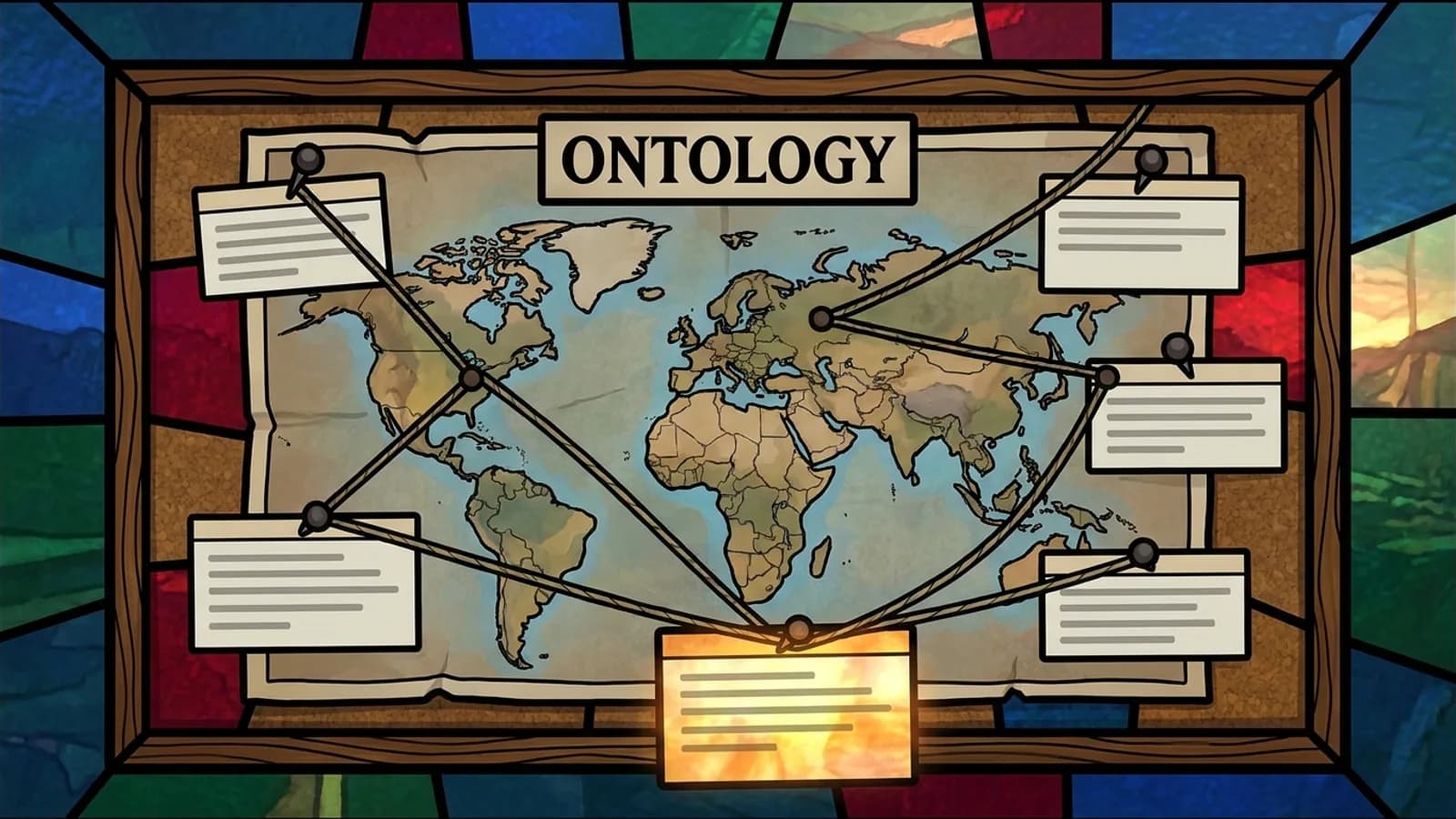
Genie Ontology is the map of business meaning that Databricks Genie reads before it answers. It holds the definitions you write down, such as metric views, and the ones Genie works out for itself from your dashboards, queries and Genie Agents. When someone asks "how many active users last week?", the ontology decides which definition of "active user" Genie uses.
Genie One and Genie Code share it, so a definition fixed once is fixed for business users and engineers alike. It is in Public Preview, on by default, and free for now.
The 2 halves
| Modeled context | Inferred context | |
|---|---|---|
| What it is | Definitions you write and govern in Unity Catalog | Snippets Genie extracts by itself |
| Made from | Metric viewsSemantic LayerOne shared definition of business terms and metrics, such as revenue or active customer, that reports, dashboards and AI assistants all read instead of writing their own., domains and Pages | Metric views, dashboards, SQL queries and Genie Agents |
| Who keeps it current | You | Genie, from your assets and how they are used |
| Example | Total Revenue = SUM(o_totalprice) in a metric view | "Revenue questions should use the Finance Genie Agent" |
The inferred side is the new part. Databricks gives 3 kinds of snippet as examples: a metric definition ("an active user is a distinct user, deduplicated across all platforms"), an authoritative source ("revenue questions should be answered using the curated Finance Genie Agent") and a business rule ("a qualified lead only counts once a demo is booked").
How Genie picks one definition
Most companies have 3 definitions of every important number: the official one, the one in last year's dashboard, and the one in somebody's notebook. Genie handles that in 3 steps:
- It filters by permission. Only snippets from assets the person asking can see count. Two people can get different answers to the same question.
- It scores authority. Each snippet is scored on where it came from, how often it is used and how fresh it is.
- It ranks and resolves. Genie takes the most relevant snippets, settles conflicts between them and cites what it used, behind the snippet icon in the answer.
Try it with one question, asked by 2 people:
Genie answers 41,200 from product.metrics.engagement: the metric view outranks the dashboard and the 2024 query, and cites it.
Our own example with made-up figures. Databricks documents that authority comes from a snippet's source, use and freshness and that snippets follow Unity Catalog permissions; it does not publish the weights, so the scores here are only an illustration. The sales rep can read the sales catalog, not the product catalog.
The example shows the 2 ways it goes wrong. With no metric view, a popular dashboard's loose definition can win. And a person who cannot read the catalog that holds the good definition gets the next best one they can see, without being told what they missed.
Make it pick your definition
The ontology fills itself, but you decide what it ranks first.
- Write the numbers that matter as metric views. A metric view is a definition Genie can quote exactly, and it is the top of the modeled half. Databricks metric views shows how to write one.
- Point each subject at one Genie Agent. A curated agent is a strong authoritative source, and Genie One's chat looks for a matching agent before anything else.
- Certify what is official. Genie One prioritizes certified objects, so certify the dashboards and tables that hold the official numbers.
- Retire the old ones. A stale dashboard that people still open keeps its definition in play. Delete it, or fix the definition in it.
- Grant read access where the definitions live. If sales people should use the product team's definition of an active user, they must be able to read it.
- Check the citations. Click the snippet icon on a few answers each week. When the wrong source wins, fix the source, not the prompt.
Ontology, semantic layer, or instructions?
A semantic layerSemantic LayerOne shared definition of business terms and metrics, such as revenue or active customer, that reports, dashboards and AI assistants all read instead of writing their own. is the part you write: metric views and their joins. The ontology is wider. It holds that layer plus what Genie infers, and ranks the two together. Workspace instructions in /Workspace/.genie_workspace_instructions.md are something else again: house rules for Genie One chat only, such as your fiscal year, with no effect on Genie Code or on how snippets rank.
The same idea runs through text-to-SQLText-to-SQLA model turning a question in plain words into a database query, so people can ask the data directly. It is only as right as its knowledge of the tables and their meaning. in general: a model writing SQL from a question is only as good as the definitions it is given. Genie vs Genie One vs Genie Code shows where each Genie reads this context, and our course part on metric views builds one over a real gold table.
Questions
- What is Genie Ontology?
- Genie Ontology is the shared context layer that tells Databricks Genie what your business terms mean and where the trusted answers live. It combines context you model in Unity Catalog, such as metric views, domains and Pages, with snippets Genie infers on its own from metric views, dashboards, SQL queries and Genie Agents. Genie One and Genie Code both use it.
- What is an ontology snippet?
- A short piece of business knowledge Genie extracts from your assets, such as a metric definition (an active user is a distinct user across all platforms), an authoritative source (answer revenue questions with the Finance Genie Agent) or a business rule (a qualified lead counts once a demo is booked). Each snippet gets an authority score from its source, how often it is used and how fresh it is.
- Does Genie Ontology respect permissions?
- Yes. Snippets are gated by Unity Catalog permissions, so Genie only uses snippets extracted from assets the person asking can see. Two people can get different answers to the same question if they can read different assets.
- Does Genie Ontology cost anything?
- Not at the moment. It is in Public Preview, and Databricks says customers do not currently pay for curating ontology snippets, though pricing may change with notice. The queries Genie runs to answer still use a SQL warehouse.
- Do I need to turn Genie Ontology on?
- No. It has been enabled by default since August 2026, and ontology snippets have been open to all customers since 13 August 2026 without asking for access. You see what it used by clicking the snippet citation icons in a Genie answer.
Sources