Databricks Genie vs Genie One vs Genie Code: what each one does
Databricks Genie is now a family of 3: Genie One, the simple chat and dashboards for business users; Genie Agents, the curated spaces data teams set up (formerly Genie Spaces); and Genie Code, the coding agent in notebooks and pipelines. Who each is for, what it costs and how they share one context.
Tecyfy · Published · 7 min read
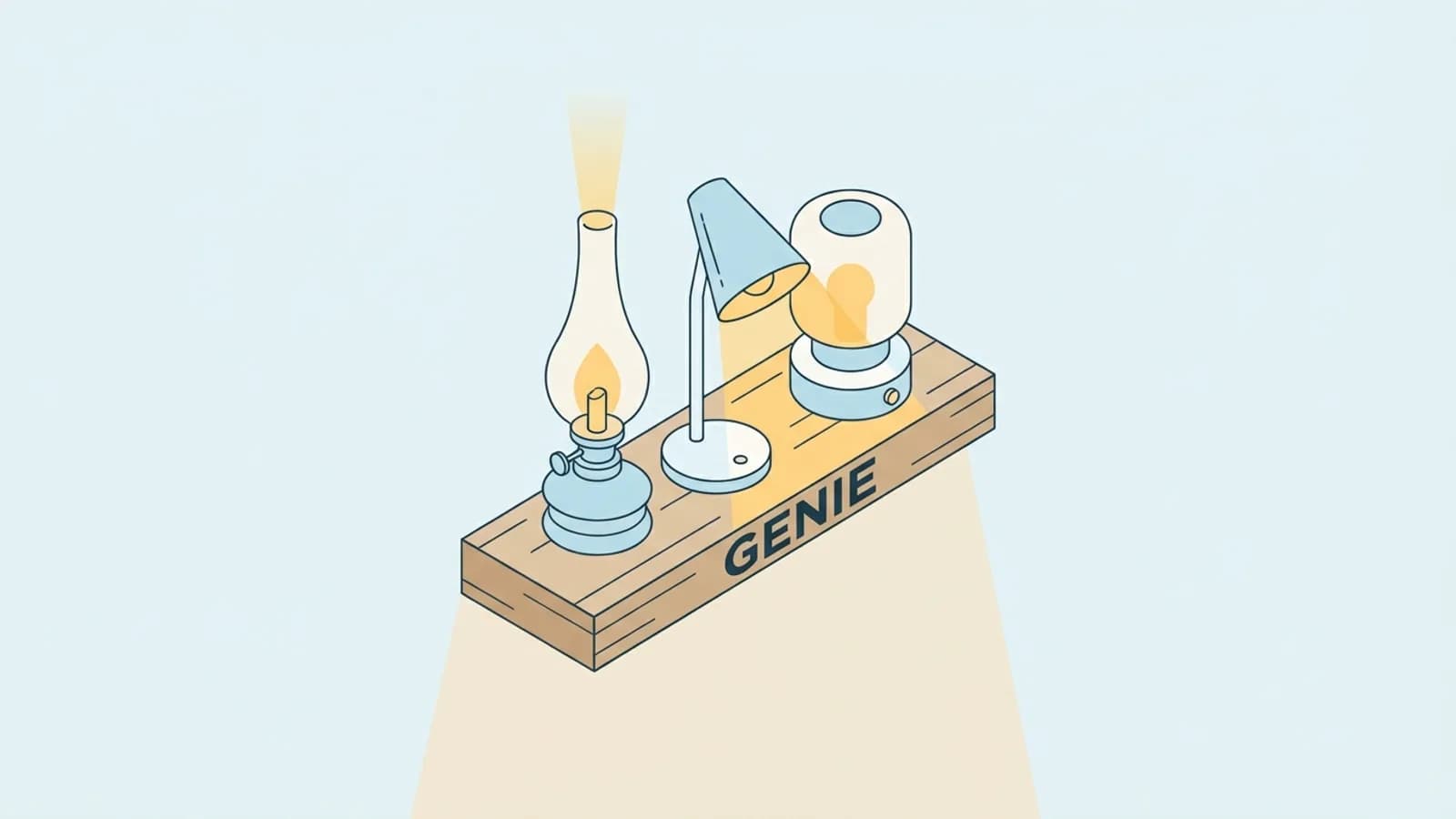
Databricks Genie is no longer one product. It is a family of 3 that share one name and one store of business context: Genie One is the simple chat and dashboard screen for business users, Genie Agents are the curated question-and-answer spaces a data team sets up (they used to be called Genie Spaces), and Genie Code is the coding agent that works in notebooks, the SQL editor and the pipelines editor.
If you remember one rule: business users ask in Genie One, data teams prepare Genie Agents so those answers are right, and engineers build with Genie Code.
The 3 Genies side by side
| Genie One | Genie Agents | Genie Code | |
|---|---|---|---|
| For | Business users | Data teams, for business users | Engineers, analysts, data scientists |
| What it is | Chat, dashboards and apps in one simple screen | A chat over chosen tables, with example SQL and instructions | An AgentAgentA model that uses tools in a loop, deciding each next step from what the last one returned, until the task is done. that plans, writes and runs code |
| Where | /one, the account-level view, iOS and Android | Inside Genie One, or its own chat; an API for apps | Notebooks, SQL editor, Lakeflow Pipelines Editor, dashboards, MLflow |
| Smallest access | Consumer access | Workspace or SQL access to build one | Access to the notebook or editor it works in |
| Old name | Databricks One | Genie Spaces | — |
| Cost to users | Free until 31 Jan 2027 | Free until 31 Jan 2027 | 150 free DBUs a month, then pay as you go |
The last row has one catch in every column: Genie's questions run as SQL on a warehouse, and that warehouse is billed as usual. Databricks' pricing page says the free part covers Genie's model usage only.
Pick a job and see which one fits:
Genie One
Use thisBusiness users
Its own simple UI at /one: chat, dashboards, apps, mobile
Free for users until 31 Jan 2027; the SQL warehouse is billed
Genie Agents
Data teams who set up trusted answers
A chat over chosen tables, with example SQL and instructions
Free for users until 31 Jan 2027; the SQL warehouse is billed
Genie Code
Engineers, analysts and data scientists
Notebooks, SQL editor, pipelines editor, dashboards, MLflow
150 free DBUs a user a month, then pay as you go
Use Genie One. Chat in Genie One looks for a Genie Agent that fits the question first, then searches dashboards, queries and metric views.
From Databricks' documentation for Genie One, Genie Agents and Genie Code. Consumer access is the least entitlement and is enough for Genie One chat. Prices are Databricks' own; a SQL warehouse that runs Genie's queries is billed separately.
Genie One: the screen for people who do not write SQL
Genie One, renamed from Databricks One, is where someone in finance or sales starts. It shows the dashboards and apps shared with them, lets them star favourites and browse by business domain, and has a chat box. They never see clusters, notebooks or catalogs.
The chat is the part that changed most. When someone asks a question, Genie One first looks for a Genie Agent that covers it, and uses that agent's tables and rules if it finds one. Only if none fits does it search dashboards, saved queries and metric views on its own. It can also read company documents once an admin connects Google Drive, SharePoint, GitHub, Glean or Atlassian. Genie One: pricing, connectors and setup covers the setup.
Genie Agents: where a data team makes the answers right
A Genie Agent is what a data team builds so that "revenue last quarter" means one thing. It has a chosen set of Unity Catalog tables, example SQL queries that show how the business asks, SQL expressions for its terms and plain-language instructions. Business users ask it questions and get back SQL, a table and a chart.
This is Text-to-SQLText-to-SQLA model turning a question in plain words into a database query, so people can ask the data directly. It is only as right as its knowledge of the tables and their meaning. with guard rails. A model writing SQL against hundreds of tables guesses at what columns mean; an agent with 5 tables, a dozen worked examples and the definition of an active customer guesses far less. That is why Genie One looks for an agent first.
Agents can also be called from your own app through the Conversation API, and connected to outside tools with MCPModel Context ProtocolAn open standard for connecting AI applications to tools and data. A system offered once as an MCP server works in any application that speaks MCP. connectors, which are in Beta.
Genie Code: the agent for people who build
Databricks calls Genie Code an autonomous agent: it plans the steps, finds the right tables, writes code, runs it, reads the output and fixes its own errors. It works in notebooks, the SQL editor, the Lakeflow Pipelines Editor, AI/BI dashboards and MLflow, and a full-page view runs several chats side by side.
2 things keep it in bounds. It can only reach data your Unity Catalog permissions allow. And by default an AI classifier approves each tool action and is meant to block actions beyond your request; you can switch to approving every action yourself. It sends your prompt, table and column names, code, sample rows and cell outputs to the model, so it needs the partner-powered AI features switched on for its agent mode.
It is the only one of the 3 that is billed now. What Genie Code does and what it costs works through the bill.
One context under all 3: Genie Ontology
The 3 products read the same map of your business, which Databricks calls Genie Ontology. Part of it is what you define on purpose in Unity Catalog, such as metric views and domains. The rest Genie infers from your dashboards, queries and agents, such as "a qualified lead counts once a demo is booked". Define a metric once and Genie One's answer and Genie Code's notebook use the same one. Genie Ontology explained shows how it ranks and checks those snippets.
The cheapest way to make every Genie more accurate is a semantic layerSemantic LayerOne shared definition of business terms and metrics, such as revenue or active customer, that reports, dashboards and AI assistants all read instead of writing their own.: write your main measures as metric views and the agents and chat answer from them instead of guessing. Our data engineering course builds one for a small shop in metric views, then puts Genie on top of it.
Which to turn on first
- Give business users Genie One once you have 2 or 3 good dashboards to show them. It costs nothing in model usage until the end of January 2027, and Consumer access keeps them out of everything else.
- Build one Genie Agent per busy subject, such as sales or support, before you announce the chat. The agent is what makes the answers trustworthy.
- Let engineers use Genie Code with a budget set first. Each user's 150 free DBUs a month reset on the 1st, and Genie budgets can block a user who passes their limit.
Genie is not the only Databricks product with a new name. Databricks renamed products lists every rename, from DLT to OpenSharing, with what changes in your code.
Questions
- What is the difference between Genie One and Genie Code?
- Genie One is the simple interface for business users: chat in plain words, dashboards and apps, with no notebooks or compute to manage. Genie Code is the AI coding and data assistant for engineers and analysts inside the workspace: it plans, writes and runs code in notebooks, the SQL editor, the Lakeflow Pipelines Editor, dashboards and MLflow, and fixes its own errors.
- Are Genie Agents the same as Genie Spaces?
- Yes. Databricks renamed Genie Spaces to Genie Agents. A Genie Agent is a chat over chosen Unity Catalog tables that a data team curates with example SQL, SQL expressions and instructions, so business questions in that area are answered the same way every time. Genie One chat looks for a matching Genie Agent before anything else.
- Is Databricks Genie free?
- Partly. Genie One and Genie Agents are free for users through 31 January 2027; usage by service principals is billed. Genie Code gives each user 150 DBUs of free usage a month and bills the rest pay as you go, which Databricks says is $10.50 for 150 DBUs in US East. The SQL warehouse that runs Genie's queries is billed separately in every case.
- Is Genie One the same as Databricks One?
- Yes. Databricks One was renamed Genie One. It opens at your workspace address plus /one, or across all workspaces at the account level, and Consumer access, the smallest entitlement, is enough to use its chat.
- Which Genie should a data engineer use?
- Genie Code. It works where engineers work, in notebooks and the pipelines editor, and it can run code, read the output and change the code. Genie One is for the people who consume the data, and Genie Agents are what a data team sets up so those people get trusted answers.
Sources