Databricks vs Azure Databricks: same platform, different contract
Azure Databricks is the Databricks platform sold, billed and supported as a first-party Azure service; Databricks on AWS and Google Cloud is bought from Databricks or a cloud marketplace. The notebooks, Spark, Delta Lake and Unity Catalog are the same. What differs is the bill: the tiers on offer, the price of a DBU, the DBUs each machine uses, and how commitments work. A worked month on each cloud.
Tecyfy · Published · 7 min read
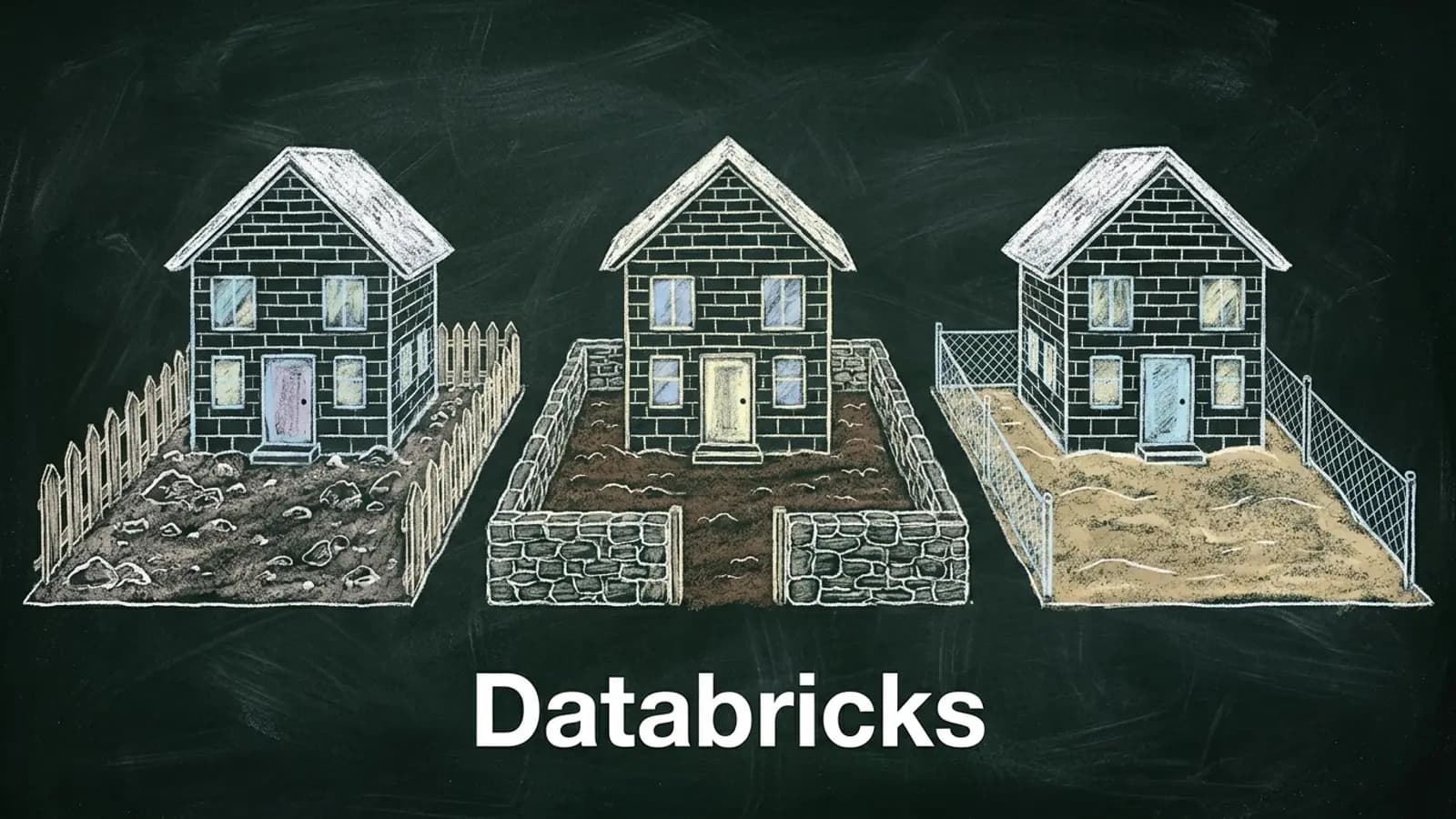
Azure Databricks and Databricks are the same platform; the difference is who sells it to you. Azure Databricks is Databricks offered as a first-party Azure service, jointly developed with Microsoft, created in the Azure portal and billed on your Azure invoice. Databricks on AWS and Google Cloud is bought from Databricks, directly or through the cloud's marketplace.
Your notebooks, PySpark, SQL, Delta Lake tables, Lakeflow jobs and Unity Catalog work the same on each. The contract, the tiers and the price of a unit of compute do not.
What is the same, and what differs
| Azure Databricks | Databricks on AWS / Google Cloud | |
|---|---|---|
| Platform, runtime, Unity Catalog | Same | Same |
| Created in | Azure portal | Databricks account console, or AWS Marketplace |
| Billed by | Microsoft, on the Azure invoice | Databricks (or through the marketplace) |
| Tiers sold | Premium only (Standard retired 1 Oct 2026) | Premium and Enterprise |
| Sign-in | Microsoft Entra ID, built in | Your identity provider through SSO |
| Commitment | Databricks Commit Units, 1 or 3 years, up to 37% off | Committed-use contracts from Databricks, usable across clouds |
| Built-in links | Power BI, Azure OpenAI, Purview | The cloud's own services (S3, IAM, Glue; GCS, BigQuery) |
| Machines | Azure VMs, billed by Azure | EC2 or Compute Engine, billed by the cloud |
The cloud machines are a second bill on every cloud for classic compute: Databricks charges DBUs, and the cloud charges for the VMs the cluster runs on. Serverless compute includes the machines in the DBU price.
The price of the same hour
List prices for jobs compute in each cloud's main US region, on an 8-vCPU, 32 GiB worker:
| Cloud | Worker | DBUs an hour | DBU price | DBUs | Machine | Per hour |
|---|---|---|---|---|---|---|
| Azure, Premium | Standard_D8ds_v5 | 2 | $0.30 | $0.60 | $0.452 | $1.05 |
| AWS, Premium | m6id.2xlarge | 1.52 | $0.15 | $0.23 | $0.475 | $0.70 |
| AWS, Enterprise | m6id.2xlarge | 1.52 | $0.20 | $0.30 | $0.475 | $0.78 |
| Google Cloud, Premium | n2-standard-8 | 1.44 | $0.15 | $0.22 | $0.388 | $0.60 |
2 things make Azure dearer here: a higher DBU price for jobs compute, and more DBUs charged for a machine of the same size. For a team running 27 worker-hours of jobs a day, a month comes to about $852 on Azure, $569 on AWS Premium and $490 on Google Cloud at list prices.
The gap is not the same for every kind of compute. All-purpose compute (interactive notebooks) is $0.55 per DBU on Azure and on AWS and Google Premium, and serverless SQL is $0.70 on all 3. Serverless jobs are $0.45 per DBU on Azure against $0.35 on AWS Premium.
27 worker-hours a day of jobs compute: Azure $852, AWS $569, Google Cloud $490 a month at list prices.
List prices for one 8-vCPU, 32 GiB worker in AWS us-east-1, Azure East US and Google Cloud us-central1, 30 days. DBUs are paid to Databricks (to Microsoft on Azure); the machines to the cloud. Azure sells Premium only. Commitments and negotiated discounts lower all 3.
These are list prices. Most companies that spend seriously on Databricks pay less, through Databricks Commit Units on Azure or a committed-use contract with Databricks, and through their cloud's own discounts on the machines. A list-price gap is a reason to ask for quotes, not an answer.
What decides it, in practice
Where your data and your other systems already are. Moving data between clouds costs egress and adds a copy to govern. A company whose data lake, identities and reporting live on Azure (ADLS, Entra ID, Power BI) gets the most from Azure Databricks; the same goes for S3 and IAM on AWS.
How the company buys software. Azure Databricks is bought like any Azure service, on the Azure invoice, with Microsoft support for the service. If spend on Azure counts toward a commitment your company already has with Microsoft, check with your Microsoft account team whether Azure Databricks usage counts toward it. On AWS, buying through the AWS Marketplace puts Databricks on the AWS bill.
Which tier you need. Azure sells one tier, Premium, which includes Unity Catalog and the access controls most teams need. On AWS and Google Cloud, some security and compliance features are sold in Enterprise; compare the tier pages for the specific feature before assuming.
Moving code between them
Code moves with small changes. Spark, SQL, Delta tables and job definitions are the same. What changes is anything that names the cloud:
- Storage paths:
abfss://container@account.dfs.core.windows.net/on Azure,s3://bucket/on AWS,gs://bucket/on Google Cloud. Unity Catalog external locations and volumes hide these from most code. - Credentials: managed identities on Azure, IAM roles on AWS, service accounts on Google Cloud, each set up as a storage credential in Unity Catalog.
- Machine names in cluster and job definitions, and their DBU rates.
What to do
- Price your own workload on each cloud with our Databricks cost calculator, which reads the current DBU and machine prices for all 3.
- If you are on Azure and comparing with Microsoft's own platform, read Microsoft Fabric vs Databricks.
- Before choosing classic compute anywhere, see whether serverless or classic suits the job, and if the bill is already high, why your Databricks bill is too high.
The governance layer is the same on every cloud: Unity CatalogUnity CatalogDatabricks' governance layer: one place that names every table, file volume, model and function as catalog.schema.object, decides who may use each, and records lineage and access..
Questions
- What is the difference between Databricks and Azure Databricks?
- Azure Databricks is the Databricks platform offered as a first-party Azure service, jointly developed by Databricks and Microsoft, created in the Azure portal and billed through your Azure account. Databricks on AWS or Google Cloud is the same platform bought from Databricks directly or through the cloud's marketplace. Notebooks, Spark, Delta Lake and Unity Catalog work the same on each; tiers, prices and contracts differ.
- Is Azure Databricks more expensive than Databricks on AWS?
- At list prices, usually for classic jobs compute. Azure Databricks Premium charges $0.30 per DBU for jobs compute in East US, against $0.15 on AWS Premium and $0.20 on AWS Enterprise in us-east-1, and an 8-vCPU Azure worker uses 2 DBUs an hour against 1.52 for a similar AWS machine. All-purpose compute is $0.55 per DBU on both. Negotiated discounts change the picture, so compare quotes, not list prices.
- Does Azure Databricks have a Standard tier?
- No longer. Microsoft retired the Azure Databricks Standard tier on 1 October 2026, so Premium is the tier on offer. Databricks on AWS and Google Cloud sells Premium and Enterprise.
- Can I use the same code on Databricks and Azure Databricks?
- Yes, for the platform itself: notebooks, PySpark, SQL, Delta Lake, Lakeflow jobs and Unity Catalog behave the same. What changes is anything tied to the cloud: storage paths (abfss:// on Azure, s3:// on AWS), identities and credentials, networking and machine type names.
- Can Azure Databricks use a Databricks commitment?
- Azure Databricks offers its own pre-purchase plan, Databricks Commit Units for 1 or 3 years, with up to 37% off pay-as-you-go DBU prices, bought through Azure. Databricks' own committed-use contracts on AWS and Google Cloud can be used across clouds, and their terms come from Databricks sales.